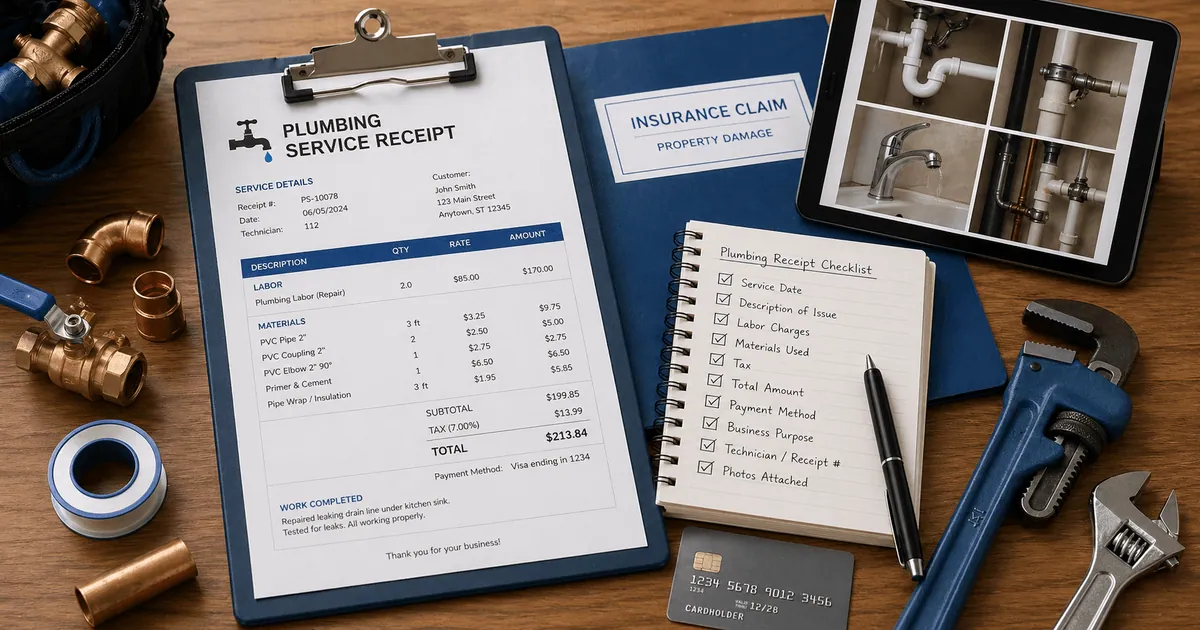
Plumbing Receipt for Insurance Claims
Ready to create your own? Use our free receipt generator — no account needed.
Generate Emergency Plumbing Repair Receipt →On this page
If you need a plumbing receipt for an insurance claim, clarity matters more than decoration. The document should make it easy to see what work was performed, where it happened, and what it cost.
That aligns with general paid-expense documentation rules as well: the record should clearly identify the service, date, and amount paid. See IRS Publication 463.
Quick Answer
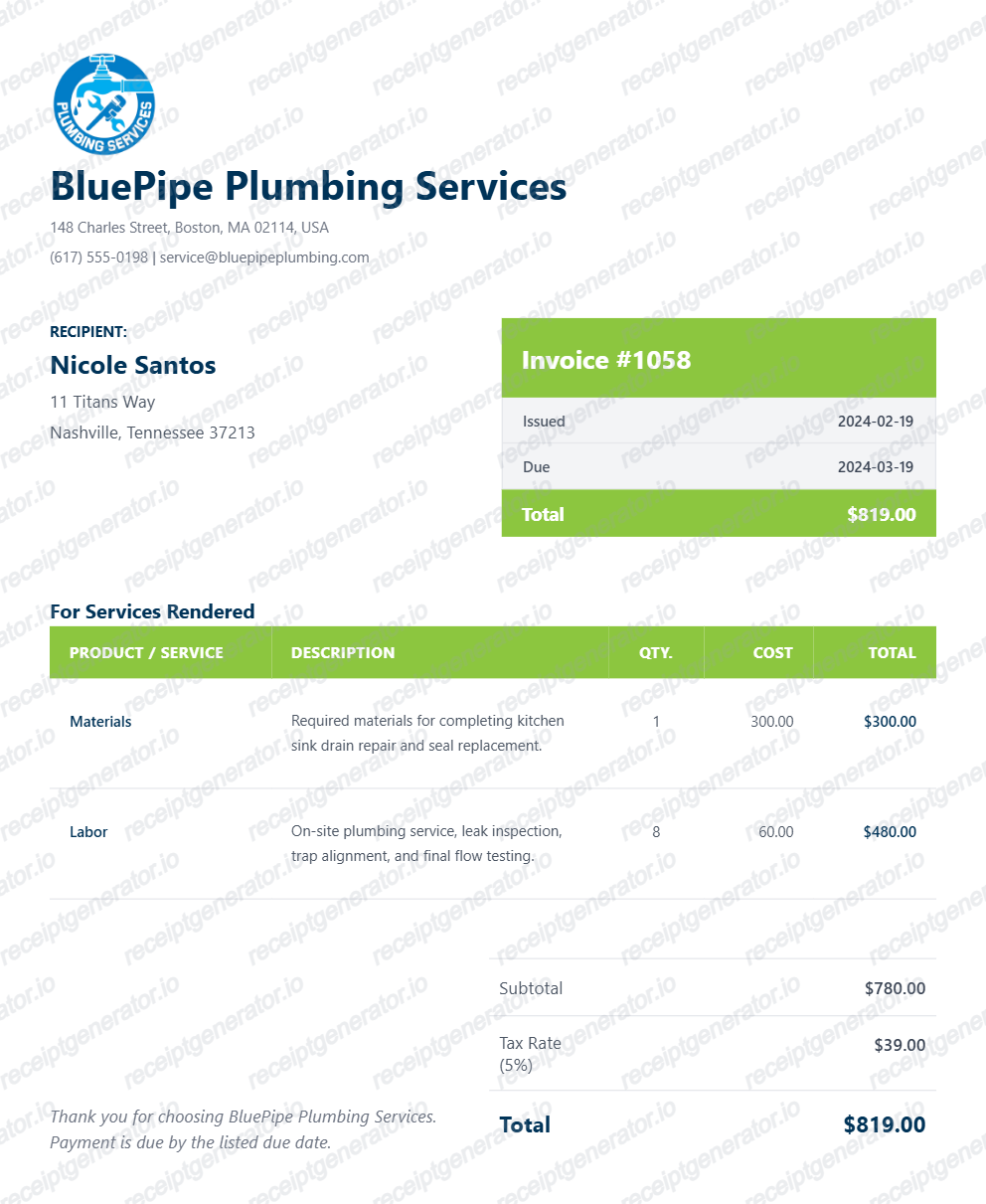
For insurance use, a plumbing receipt should clearly show the contractor, service address, repair details, labor, materials, and total charged.
What Insurers Usually Check
Most insurance reviews focus on:
- business name and contact details
- customer and service address
- service date
- repair or installation description
- labor charges
- material charges
- tax and total
Keep the Work Description Specific
General wording like “plumbing work” is weaker than descriptions such as:
- leak repair
- drain cleaning
- pipe replacement
- faucet installation
- water heater repair
The more specific the repair line is, the easier it is for a claim reviewer to match the service document to the actual damage or completed repair scope.
Build a Cleaner Claim Record
If you need a structured version for your files, use the Plumbing Receipt Generator.
Create a Plumbing Receipt for Insurance Records
Generate a clean plumbing receipt with service details, labor, materials, and totals.
Related Guides
Final Takeaway
For insurance claims, the best plumbing receipt is the one that is easiest to verify. Specific repair details and itemized charges make the document much more useful.
FAQ
Yes. A detailed plumbing receipt can help support an insurance claim when it clearly shows the service address, completed work, materials, dates, and total charged.
Insurers usually want contractor details, service date, service address, repair description, labor, materials, and the final amount charged.