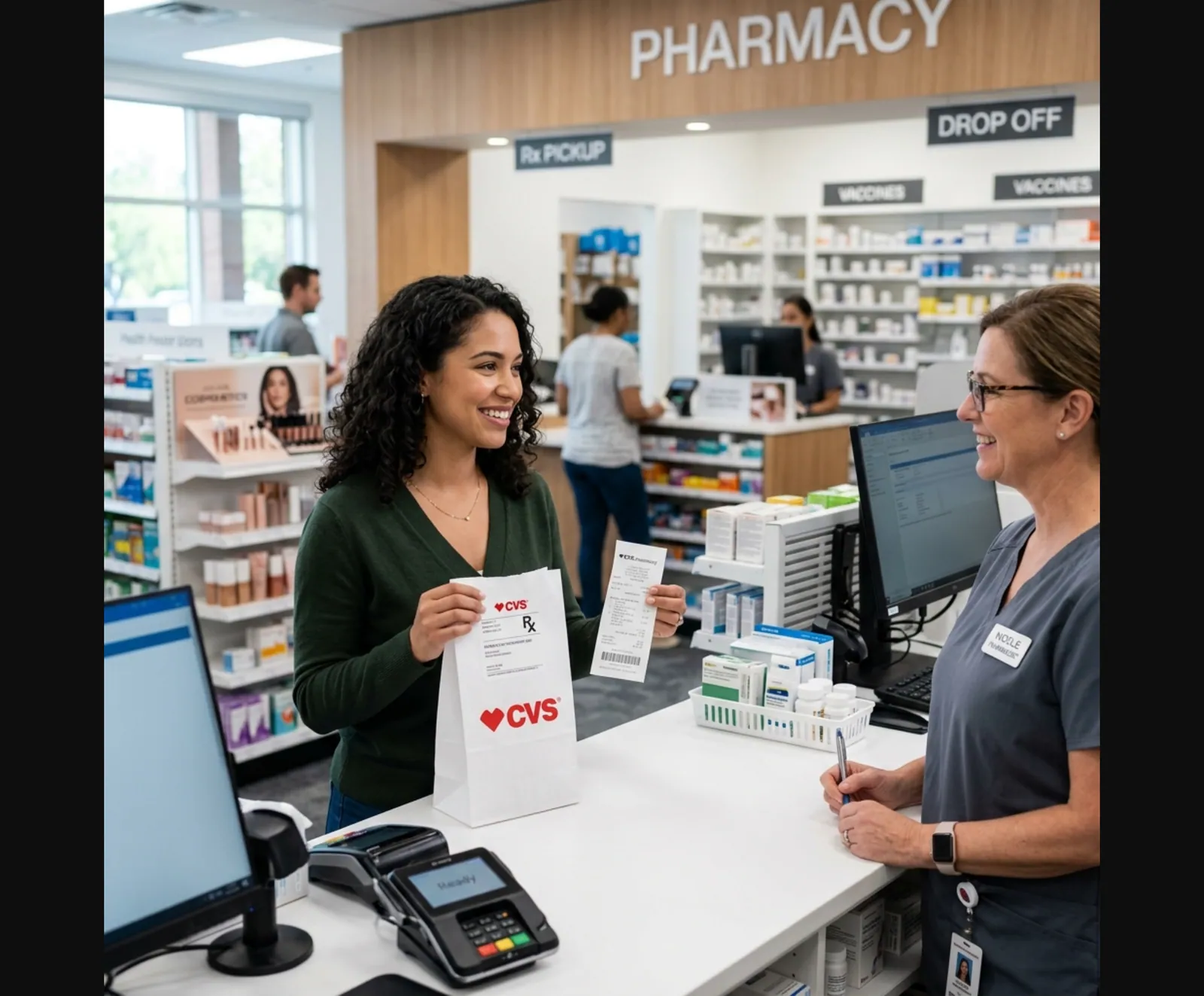
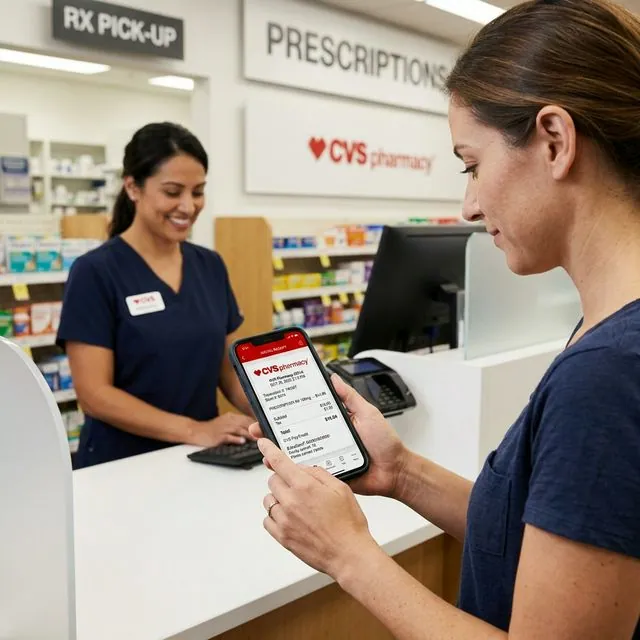
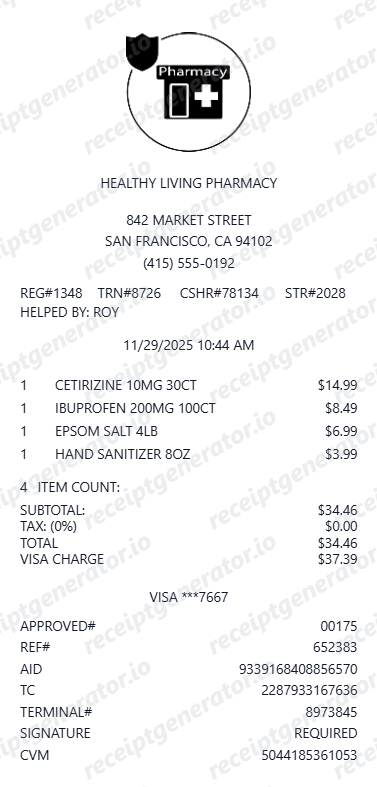
What a CVS Pharmacy Receipt Should Include
Ready to create your own? Use our free receipt generator — no account needed.
Generate Pharmacy Receipt →On this page
If you are saving a CVS pharmacy receipt for reimbursement, insurance, or personal records, the most important question is not just whether you have a receipt. It is whether the receipt includes the right details. A weak record creates extra work later. A clear one is easier to store, review, and submit.
Quick Answer
A strong CVS pharmacy receipt should clearly identify the pharmacy purchase, show the date, and include enough detail to explain what you paid for and how much you paid.
Why This Matters
For FSA, HSA, insurance, and medical recordkeeping, a receipt that only shows a payment total may not be enough. The stronger the item or prescription detail, the more useful the receipt becomes.
The Core Fields a CVS Pharmacy Receipt Should Include
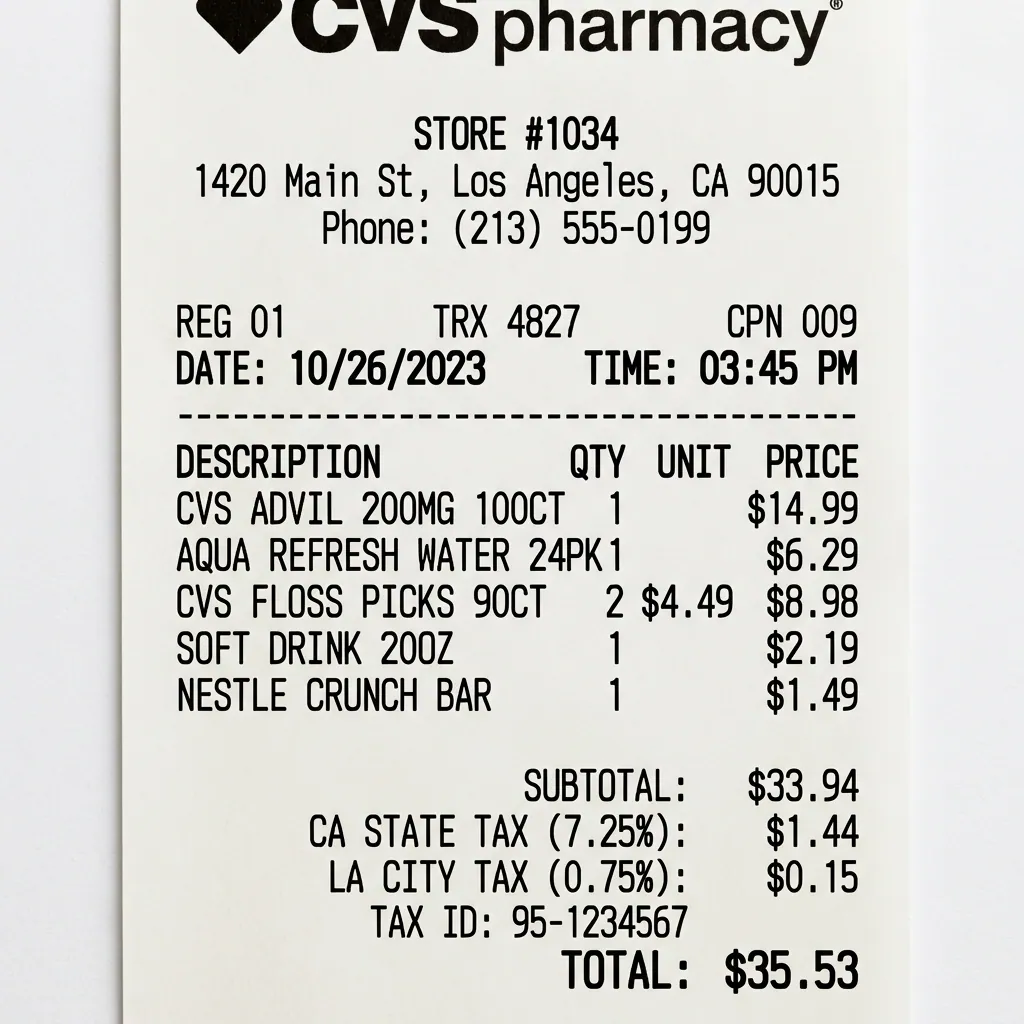
The exact layout may vary, but the most useful CVS pharmacy receipt usually includes these fields:
- pharmacy name
- store or pharmacy location
- date of purchase or pickup
- prescription or medication reference
- amount paid
- payment-related details
If the document also shows the Rx number, medication name, quantity, days supply, or patient responsibility after insurance, that is even better.
The Most Important Receipt Fields
CVS Pharmacy Receipt Fields
| Feature |
|---|
Why the Rx Number Helps
The Rx number is not the only useful field, but it is one of the best identifiers on a CVS pharmacy receipt.
It helps with:
- matching a receipt to a specific prescription
- separating one prescription purchase from another
- organizing pharmacy history
- explaining the record during reimbursement or insurance follow-up
If your receipt or summary includes the Rx number, keep that version instead of a simplified payment record.
What Matters Most for FSA or HSA
For FSA or HSA purposes, clarity matters more than format.
The receipt should make it clear:
- where the purchase happened
- when it happened
- what the expense was
- how much you paid
That is why pharmacy receipts are usually stronger than generic payment confirmations. A debit card charge or bank statement might prove that CVS charged you, but it does not explain the medical expense clearly enough on its own.
Related: Pharmacy Receipt for FSA & HSA: What Your Form Needs
Official References
For pharmacy receipt documentation and health-plan recordkeeping, these primary sources are the clearest references:
- IRS Publication 969: Health Savings Accounts and Other Tax-Favored Health Plans
- CVS Help: Help with ExtraCare
What Matters Most for Insurance or Medical Records
Insurance and medical documentation usually need the same basic ingredients:
- pharmacy identity
- date
- prescription-related detail
- amount paid
If you are saving receipts for future reference, organize them by:
- year
- pharmacy
- medication or visit type
- amount paid
That makes later follow-up much easier, especially if you need to retrieve multiple receipts over time.
Is a CVS Store Receipt Enough?
Sometimes people save the regular CVS store receipt and assume that is enough for everything. That works better for front-store items than for prescriptions.
A store receipt is more useful for:
- OTC items
- ExtraCare savings
- front-store purchases
- household budgeting
- retail returns
A pharmacy receipt is more useful for:
- prescriptions
- copays
- medical reimbursement
- insurance documentation
- pharmacy-specific records
If you need a deeper breakdown, see: CVS Prescription Receipt vs Store Receipt
What If the Receipt Is Missing Important Details?
If your current receipt is too minimal, the best next step is to ask the pharmacy for a stronger record, such as a prescription purchase summary.
That can help when:
- the original printout is missing
- the payment total is visible but the prescription detail is weak
- you need a cleaner record for reimbursement
- you are organizing multiple pharmacy purchases
If you need help retrieving one, see: How to Get a CVS Prescription Receipt
What to Save From a Mixed CVS Visit
Many CVS visits include both pharmacy and front-store purchases. If that happened, keep both records.
Best practice:
- Save the pharmacy receipt or summary for prescription-related documentation
- Save the retail receipt for OTC or household purchases
- Keep them together if they happened on the same date
- Label them clearly in your records
That gives you stronger documentation later and avoids confusion over which receipt covers which part of the purchase.
Need a Backup CVS Receipt Record?
If you need a structured personal backup after confirming the original purchase details, use the CVS Receipt Generator to organize the information into a clean record.
That is most useful for personal recordkeeping. For official reimbursement, insurance, or pharmacy verification, the CVS-issued pharmacy document should come first whenever possible.
Create a Structured CVS Receipt Record
Use the CVS receipt template to organize verified purchase details into a clean backup record.
Related CVS and Pharmacy Guides
- How to Get a CVS Prescription Receipt
- CVS Prescription Receipt vs Store Receipt
- CVS Receipt Lookup: Get Your Digital Receipt or Reprint
- Pharmacy Receipt for FSA & HSA: What Your Form Needs
- CVS Receipt Generator
- Rx Receipt Template
Final Takeaway
The best CVS pharmacy receipt is the one that clearly identifies the prescription purchase and the amount you paid. If the record is too vague, ask for a stronger pharmacy summary. Good documentation is less about having any receipt and more about having the right one.
FAQ
A useful CVS pharmacy receipt should show the pharmacy name, date, medication or prescription reference, amount paid, and enough transaction detail to identify the purchase.
For reimbursement or medical records, item-level clarity is more useful than a simple payment total.
The Rx number is helpful because it clearly identifies the prescription transaction.
If it is available on the receipt or summary, keep it.
The key fields are the merchant name, purchase date, item or prescription detail, and amount paid.
If the document clearly shows what was purchased and what you paid, it is much more useful for reimbursement review.
Usually no. A receipt that only shows the total charged is weaker than one that identifies the pharmacy purchase in detail.
Supporting item or prescription detail is important for documentation.
Yes, if the same visit included both prescription and front-store purchases.
The pharmacy receipt is stronger for prescription documentation, while the store receipt is stronger for OTC and retail items.
Yes. After confirming the purchase details, you can use a receipt template for personal recordkeeping.
For official reimbursement or insurance purposes, the pharmacy-issued document should come first whenever possible.