Thermal vs Standard Receipt: What's the Difference?
Ready to create your own? Use our free receipt generator — no account needed.
Browse Receipt Templates →On this page
Thermal receipts and standard paper receipts both document transactions, but they are produced differently and serve slightly different needs. If you are choosing between the two for your business, this comparison covers the key differences.
Quick Answer
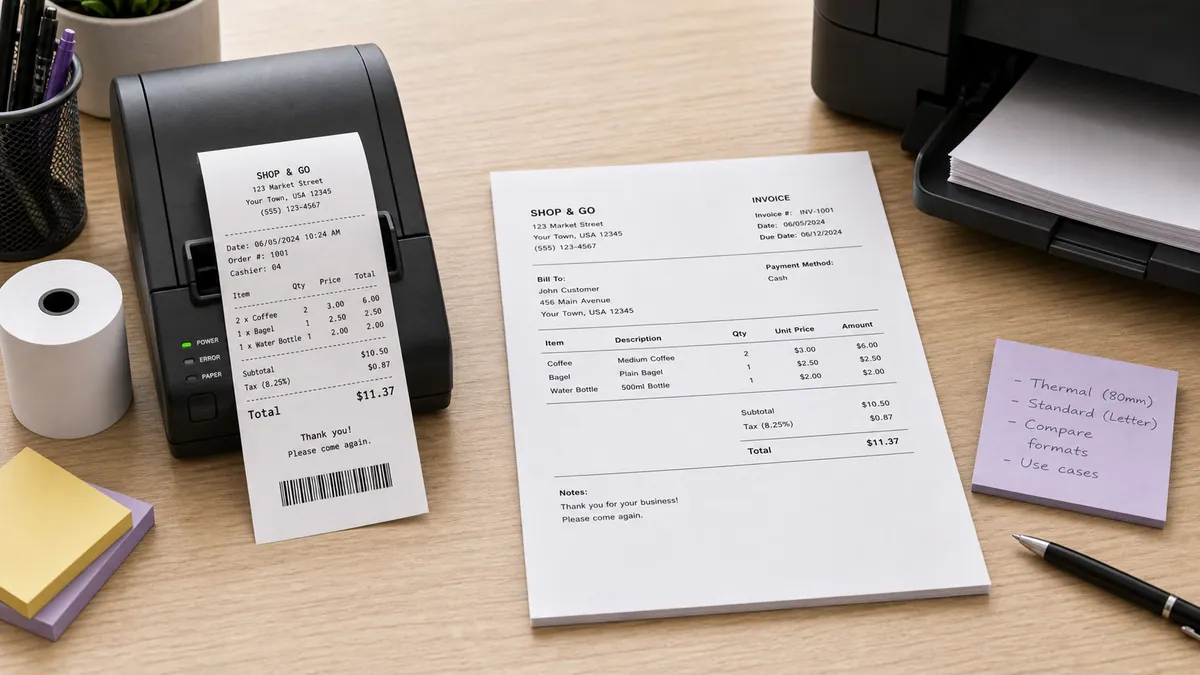
Thermal receipts use heat on special paper — fast, no ink, but they fade. Standard receipts use ink or toner on regular paper — slower, costs more, but last longer and copy clearly.
How Each Type is Printed
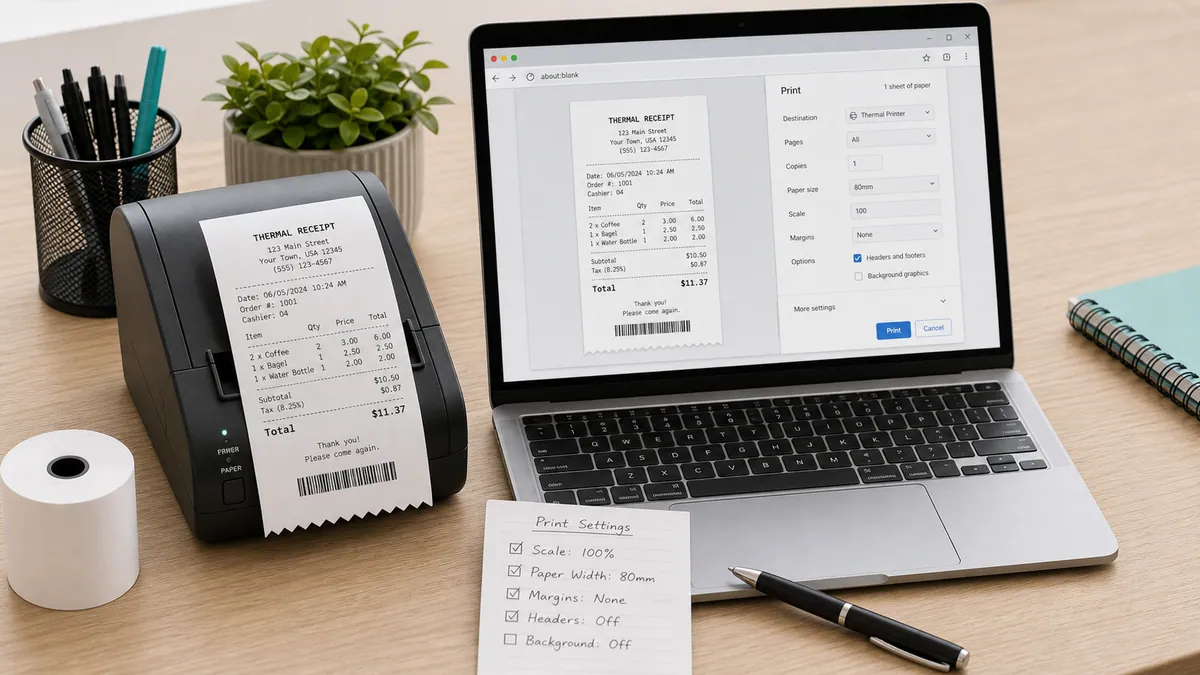
Thermal receipts: A thermal printhead applies heat directly to heat-sensitive paper. No ink cartridge, no toner, no ribbon. The heat activates chemicals in the paper coating, creating text and graphics.
Standard receipts: Printed using a standard inkjet or laser printer — the same type used for documents and photos. Requires ink cartridges or toner.
Side-by-Side Comparison
Thermal vs Standard Receipt
| Feature |
|---|
When to Use Thermal Receipts
Thermal receipts are the right choice when:
- Speed matters — thermal printers print a receipt in 2–3 seconds, faster than any inkjet
- Volume is high — no ink to replace means lower running cost per receipt
- Space is limited — compact thermal printers fit on any counter
- You run a market stall or pop-up — portable Bluetooth thermal printers work from your phone
- Customer copies are sufficient — the receipt is for immediate use, not long-term storage
Typical use cases: retail stores, restaurants, cafes, food trucks, market stalls, kiosks, hair salons, pharmacies.
When to Use Standard Receipts
Standard paper receipts are better when:
- Long-term storage is required — insurance claims, tax records, warranty documentation
- Photocopying is needed — thermal copies come out blank or faded
- The receipt will be signed — some business processes require a signed paper copy
- You already have a standard printer — no additional hardware needed
- The receipt is part of a branded document — full-color branding on A4 or Letter
Typical use cases: invoices, formal quotes, warranty receipts, high-value purchases, insurance documentation.
Thermal Receipt Formats: 80mm vs 58mm
Most POS thermal printers use one of two roll widths:
| Width | Use |
|---|---|
| 80mm | Standard retail, restaurant, cafe — most common |
| 58mm | Compact/portable printers — food trucks, market stalls |
The receipt generator templates are designed for 80mm — the most widely used format.
Create a Thermal Receipt for Your Business
Open the Cafe Thermal Receipt Generator
Create an 80mm POS-style cafe receipt with order items, tax, payment, and loyalty details.
Available Thermal Receipt Template
Related Guides
Final Takeaway
Thermal receipts are faster, cheaper to run, and perfectly suited for retail, hospitality, and vendor use. Standard receipts last longer and copy better — ideal for records that need to survive years of storage. For most small business and vendor scenarios, thermal is the right choice.
FAQ
Thermal receipts are printed by heat on special heat-sensitive paper — no ink required. Standard receipts use ink or toner on regular paper.
Thermal receipts are narrow (80mm), fade over time, and cannot be photocopied reliably. Standard paper receipts are wider, more durable, and copy normally.
Thermal receipts are better for high-volume, fast-paced retail and hospitality environments. Standard receipts are better when the document needs to last long-term or be photocopied.
Yes. Thermal paper fades when exposed to heat, sunlight, or certain chemicals. Receipts stored in a wallet next to a phone or exposed to direct sunlight can fade within months.