Handyman Invoice for Insurance Claims: What Adjusters Need
Ready to create your own? Use our free receipt generator — no account needed.
Browse Receipt Templates →On this page
Insurance claims require detailed, accurate documentation. A handyman invoice submitted for an insurance claim will face closer scrutiny than a standard client invoice — here's what adjusters look for and how to structure your documentation.
Quick Answer
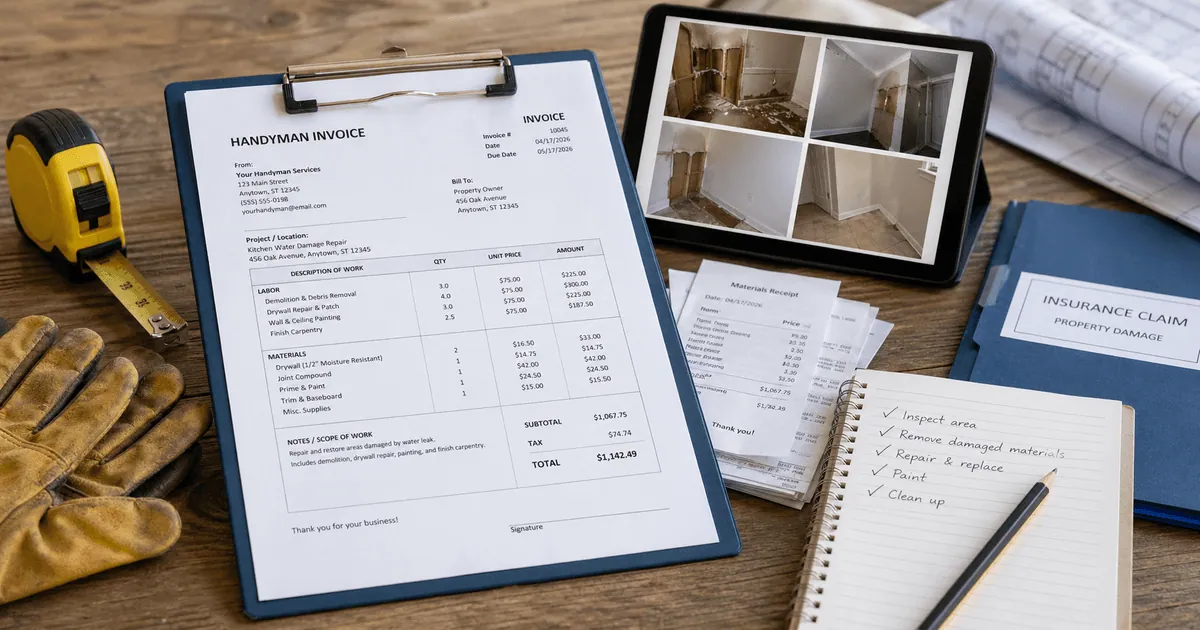
For insurance claims, a handyman invoice needs: contractor name, license number, job address, damage description, itemized labor and materials with unit costs, total, and your signature. Match the adjuster's estimate line by line where possible.
What Insurance Adjusters Need
Handyman Invoice Fields for Insurance Claims
| Feature |
|---|
Matching the Adjuster's Estimate
The fastest way to get a claim approved is to match your invoice structure to the adjuster's repair estimate:
- Use the same line-item categories the adjuster used
- Note any discrepancies with a written explanation
- Attach photos that document each area of repair
- Keep material receipts to back up every materials line item
Documentation Package for Insurance
Submit these together:
- Itemized invoice (PDF)
- Material receipts
- Before-and-after photos labeled by location
- Signed completion statement
- Copy of your contractor license (if required)
Common Invoice Mistakes That Delay Claims
- Lump-sum billing instead of itemized labor and materials
- Missing contractor license number
- Invoice date doesn't match work completion date
- No reference to the insurance claim or policy number
- Materials costs not supported by receipts
Create an Insurance-Ready Handyman Invoice
Create a Handyman Invoice for Insurance Claims
Use the handyman invoice template to generate a detailed, itemized PDF ready for insurance adjuster review.
Related Guides
- Handyman Invoice Template
- Handyman Invoice vs Receipt
- Printable Handyman Invoice PDF
- Repair Receipt for Insurance Claims
Final Takeaway
For insurance claims, a handyman invoice must be itemized, detailed, and match the adjuster's format. Include your license number, claim reference, dated photos, and material receipts — that combination gets claims processed with the fewest delays.
FAQ
Adjusters need itemized labor and materials with unit costs, a clear description of the damage repaired, contractor name and license number, job dates, and the total cost.
An invoice that matches the adjuster's estimate — line by line — processes significantly faster.
Licensing requirements vary by state and job type. Many insurance companies require licensed contractors for claims above a certain dollar amount.
Check your state's contractor licensing requirements and include your license number on every invoice submitted to insurance.
Yes. Submit the invoice directly to the insurance adjuster handling your claim, along with photos of the damage and a signed work completion statement.
Keep copies of all documents submitted — the insurance company may request additional detail.
Document the discrepancy with photos, a written explanation, and a supplemental invoice. Most adjusters have a process for supplement claims when damage is more extensive than initially assessed.
Never proceed with repairs above the approved amount without written confirmation from the insurer.