Handyman Invoice vs Receipt: Key Differences Explained
Ready to create your own? Use our free receipt generator — no account needed.
Browse Receipt Templates →On this page
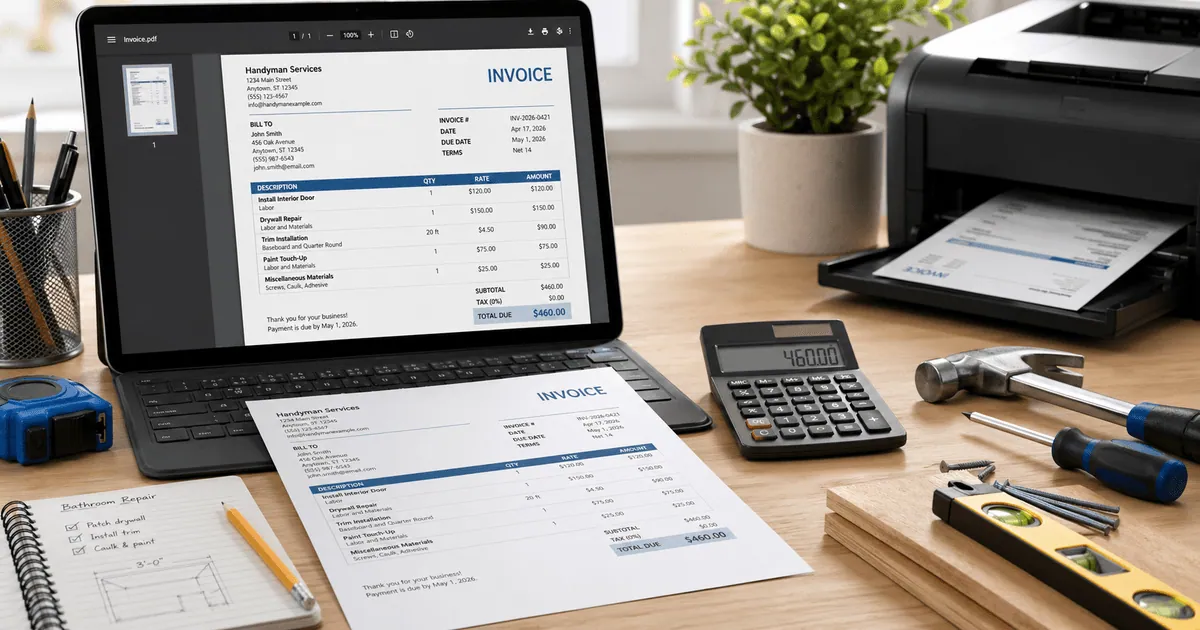
Handymen often use the terms invoice and receipt interchangeably — but they're different documents that serve different purposes. Using both correctly protects you legally and makes bookkeeping much simpler.
Quick Answer
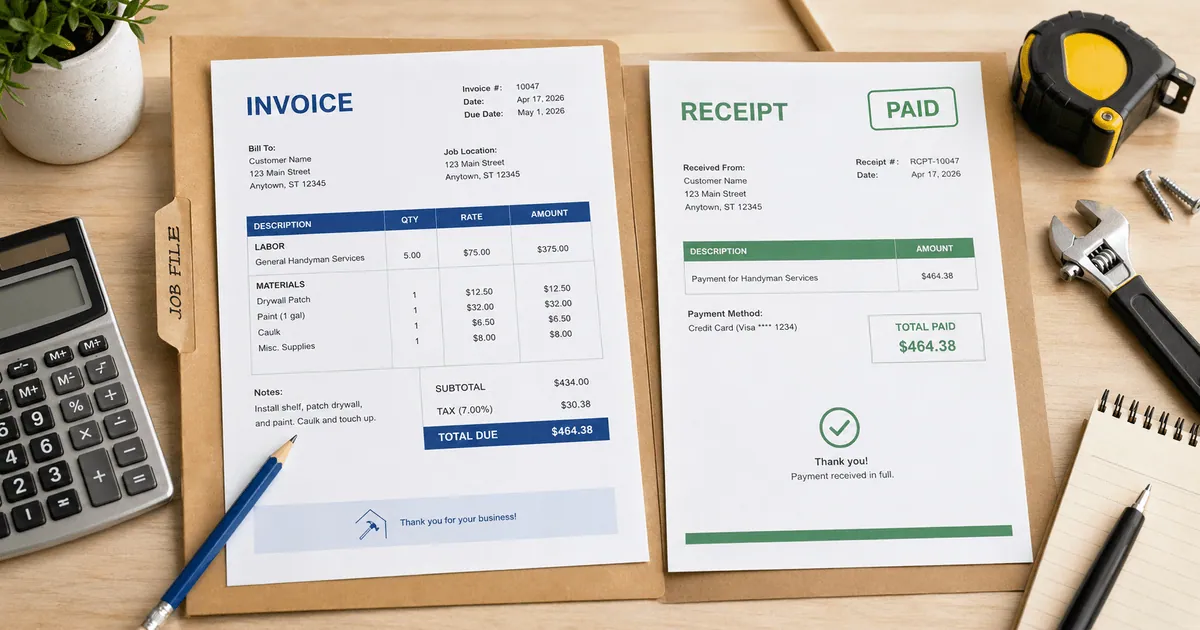
An invoice requests payment before or at service completion. A receipt confirms payment was received. Issue an invoice first, then a receipt once paid.
Side-by-Side Comparison
Handyman Invoice vs Receipt
| Feature |
|---|
When to Issue an Invoice
Issue an invoice:
- before starting a large job (with a deposit request)
- at job completion for payment-on-finish arrangements
- monthly for ongoing maintenance clients
- any time the client needs documentation of what they owe
When to Issue a Receipt
Issue a receipt:
- immediately after receiving cash payment
- after clearing a check
- when a client requests written proof of payment
- for tax-deductible home repairs (clients often need receipts for their records)
Converting an Invoice to a Receipt
The simplest approach for small jobs: mark the invoice "PAID" after receiving payment and include:
- date payment was received
- payment method (cash, check number, card last 4)
- your signature or initials
This gives the client a combined invoice-receipt and keeps your bookkeeping clean.
Create Your Handyman Invoice or Receipt
Create a Handyman Invoice or Receipt
Use the handyman template to generate a professional PDF invoice or receipt with labor, materials, and payment details.
Related Guides
- Handyman Invoice Template
- Handyman Invoice for Insurance Claims
- Printable Handyman Invoice PDF
- Repair Receipt vs Invoice
Final Takeaway
Use an invoice to request payment and a receipt to confirm it. For small cash jobs, a marked-as-paid invoice covers both — but for larger projects, keeping them separate makes bookkeeping and tax filing significantly cleaner.
FAQ
An invoice is a payment request sent before or at the time of service. A receipt is proof of payment issued after the client pays.
Invoices show what is owed. Receipts confirm what was paid.
Yes, for professional billing. Issue an invoice first, then provide a receipt when the client pays — especially for cash or check payments.
For card payments, the card transaction often serves as the payment receipt, but a written receipt protects both parties.
Yes, if you mark it 'PAID' with the payment date and method after receiving payment. This is common for small jobs.
For larger projects or tax purposes, a separate receipt is cleaner and more professional.