Handyman Invoice Template: What to Include and How to Use One
Ready to create your own? Use our free receipt generator — no account needed.
Browse Receipt Templates →On this page
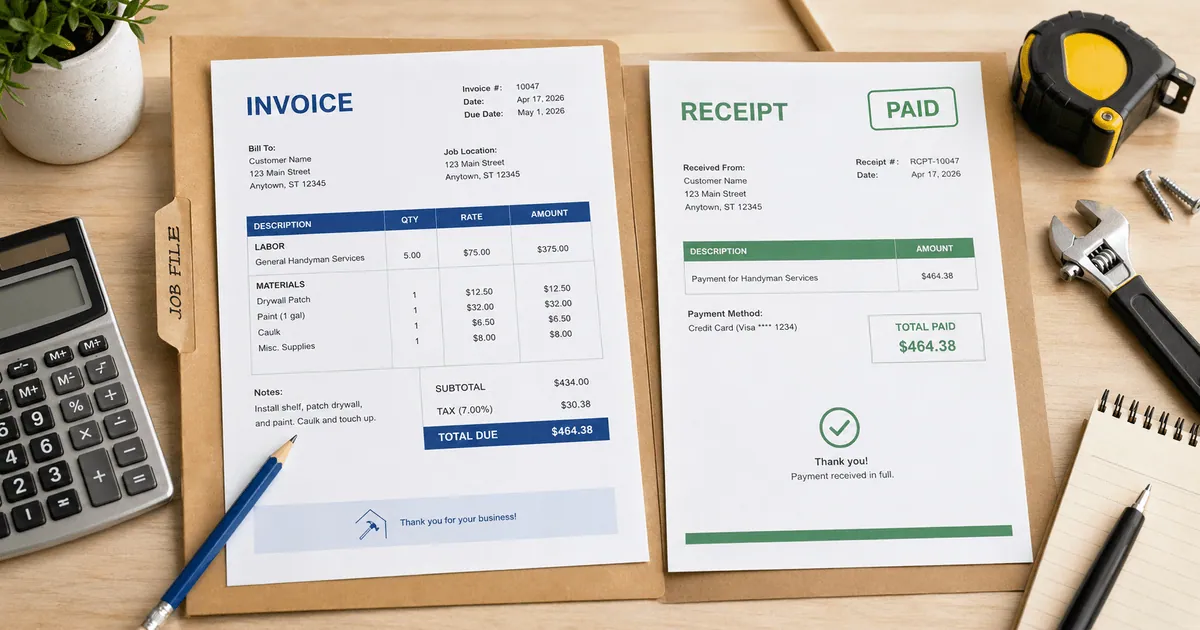
A well-structured handyman invoice protects you and your clients. It documents exactly what work was done, what materials were used, and what payment is owed — reducing disputes and speeding up payment.
Quick Answer
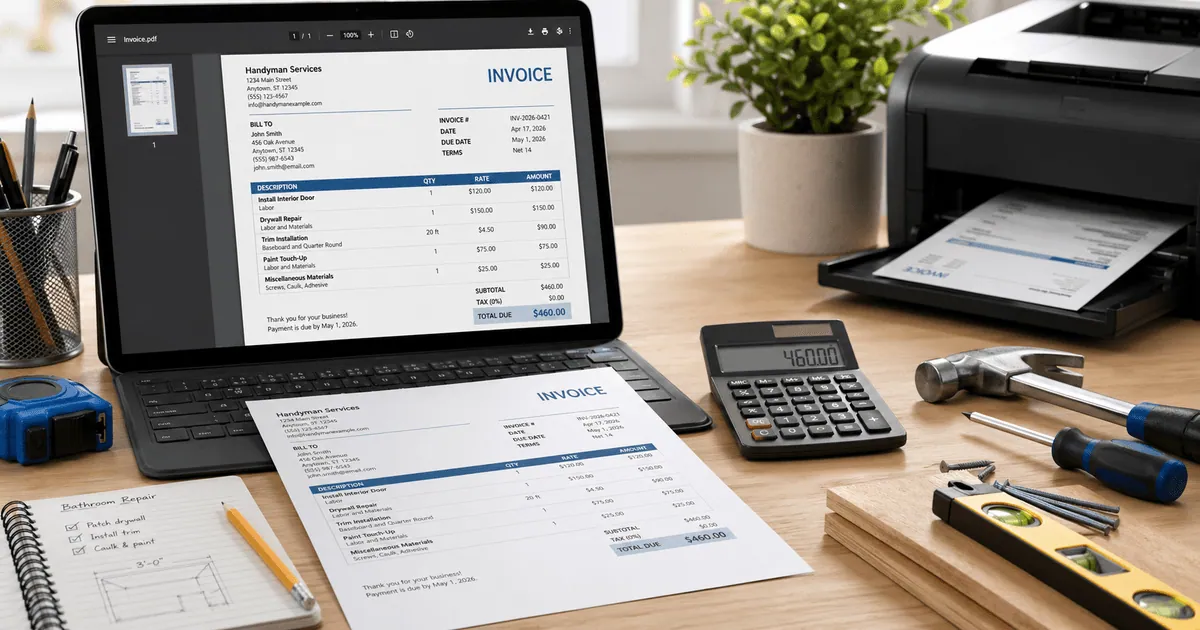
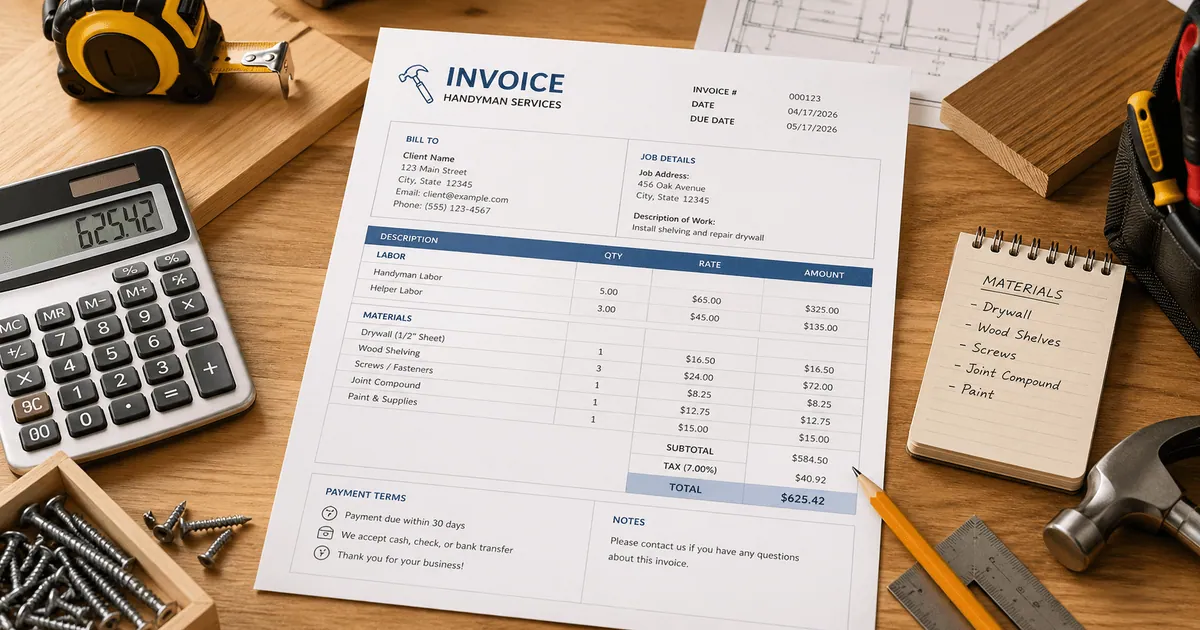
A handyman invoice template needs: your business name and contact, client details, invoice number, job date, itemized labor and materials with rates, subtotal, tax, total due, and payment terms.
Core Handyman Invoice Fields
Handyman Invoice Template Fields
| Feature |
|---|
Labor vs Materials Breakdown
Separating labor and materials on the invoice protects you from tax and liability issues:
- Labor: List each task with estimated hours and your hourly rate
- Materials: List each item purchased with quantity and unit cost
- Markup: If you mark up materials, show the markup as a separate line or roll it into the unit cost
Clients appreciate this breakdown because it shows exactly what they're paying for.
Invoice Number and Record-Keeping
Use a consistent invoice numbering system from the start:
- Sequential: INV-001, INV-002, INV-003
- Date-based: 2026-0417-001
- Client-based: SMITH-001, SMITH-002
This makes bookkeeping, tax filing, and dispute resolution significantly easier.
Create a Handyman Invoice
Use the Handyman General Contracting Receipt Generator to build a professional, itemized invoice with labor, materials, tax, and payment terms — then download a clean PDF.
Create a Handyman Invoice
Use the handyman invoice template to generate a professional PDF with itemized labor, materials, and payment terms.
Related Guides
- Handyman Invoice vs Receipt
- Handyman Invoice for Insurance Claims
- Printable Handyman Invoice PDF
- Repair Receipt Lookup
Final Takeaway
A clear handyman invoice template — with itemized labor, materials, and payment terms — speeds up payment and prevents billing disputes. Build the habit of issuing an invoice before every job, no matter how small.
FAQ
A handyman invoice should include your business name and contact, client name and address, invoice number, job date, itemized services with labor hours and rates, materials cost, subtotal, tax, and total due.
Adding payment terms and accepted payment methods reduces delays and disputes.
No. An invoice is issued before or at the time of service to request payment. A receipt confirms payment was received.
Always issue an invoice first, then provide a receipt once the client pays.
It depends on your state and the type of work. Labor-only services are often exempt, but materials may be taxable. Check your state's contractor tax rules.
When in doubt, consult a local accountant or your state's department of revenue.
Common handyman payment terms are Net 15 or Net 30 for established clients, or payment on completion for new clients.
For larger jobs, a 25–50% deposit at the start protects against non-payment.