Rental Car Receipt for Reimbursement

Ready to create your own? Use our free receipt generator — no account needed.
Generate Rental Car Receipt →On this page
If you need a rental car receipt for reimbursement, the booking and fee details matter most. Finance teams usually want to see which company was used, how long the rental lasted, and what the final cost was after add-ons and fees.
Quick Answer
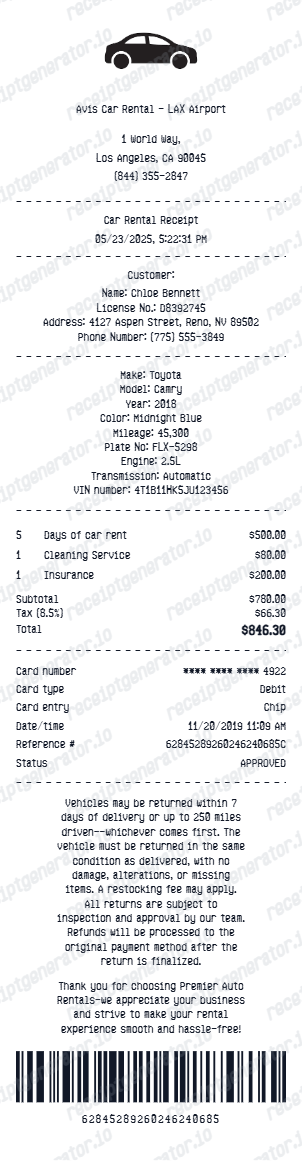
For reimbursement, a rental car receipt should clearly show the rental company, rental dates, vehicle details, fees, and total paid.
What Finance Teams Usually Need
A rental car reimbursement record usually works best when it shows:
- rental company
- pickup and return dates
- vehicle details
- daily or flat rate
- insurance or add-on fees
- mileage or fuel charges if relevant
- total paid
That gives finance enough information to review the travel expense quickly.
Rental car reimbursement also falls under the travel substantiation rules in Publication 463:
When Detail Matters Most
Detailed rental information is especially important when:
- the rental supports business travel
- insurance or waiver fees were added
- the booking includes mileage or fuel overages
- the receipt is part of a larger trip claim
Organize a Cleaner Backup Record
If you already verified the rental details and want a cleaner backup for your files, use the Rental Car Receipt Generator.
Create a Rental Car Receipt Record
Use the rental car receipt template to organize verified booking and billing details into a cleaner reimbursement-ready format.
Related Guides
Final Takeaway
For reimbursement, the best rental-car record is the original booking and billing document with clear fees and timing detail. If you need a cleaner backup for your own files, build it from those verified details.
Official IRS Reference
FAQ
Yes, if it clearly shows the rental company, rental period, vehicle, fees, and total paid.
That is usually enough for travel and expense review.
It should show the rental company, pickup and return dates, vehicle details, rate, fees, and total.
A clear booking and billing record is usually easiest for finance teams to review.