Uber Receipt for Reimbursement

Ready to create your own? Use our free receipt generator — no account needed.
Generate Uber Receipt →On this page
If you need an Uber receipt for reimbursement, clarity matters more than formatting. Finance teams usually want to see where the ride started, where it ended, what the fare breakdown was, and how much was charged.
Quick Answer
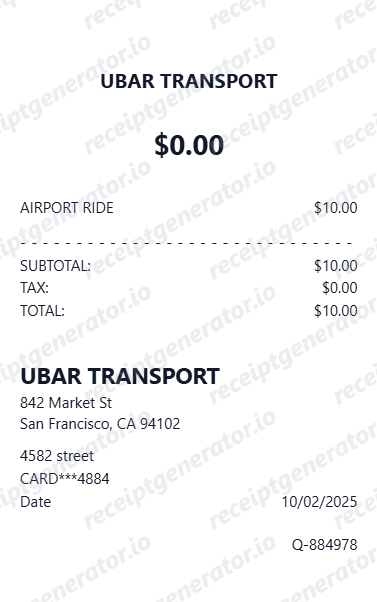
For reimbursement, an Uber receipt should clearly show the ride date, route, fare breakdown, total charged, and payment summary.
What Finance Teams Usually Need
An Uber reimbursement record usually works best when it shows:
- trip date and time
- pickup location
- drop-off location
- base fare
- fees and surge
- tip
- total charged
- payment method
That gives finance enough detail to review the ride quickly.
Uber's official help pages also confirm that trip receipts and invoices can be recovered directly from your rider account:
- Uber Help: How to get a trip receipt
- Uber Help: Request an invoice for a trip
- IRS Publication 463: Travel, Gift, and Car Expenses
Keep the Ride Context Clear
For work-related travel, it also helps to keep:
- the meeting or trip purpose
- the project or client name
- the ride date aligned with your expense report
That context makes the receipt easier to approve later.
Organize a Cleaner Backup Record
If you already verified the trip details and want a cleaner backup for your files, use the Uber Receipt Generator.
Create an Uber Receipt Record
Use the Uber receipt template to organize verified trip details into a cleaner reimbursement-ready format.
Related Guides
Final Takeaway
For reimbursement, the best Uber receipt is the original trip record with clear route and fare details. If you need a cleaner backup for your own files, build it from those verified trip details.
Official References
- Uber Help: How to get a trip receipt
- Uber Help: Request an invoice for a trip
- IRS Publication 463: Travel, Gift, and Car Expenses
FAQ
Yes, if it clearly shows the trip date, route, fare breakdown, total charged, and payment method.
That is usually enough for expense reports and travel reimbursement review.
It should show pickup, drop-off, trip timing, fare lines, tip, and the final total.
If the ride had a business purpose, keep that context with the receipt too.