StockX vs GOAT Receipt: What's Different
Ready to create your own? Use our free receipt generator — no account needed.
Generate GOAT Receipt →On this page
StockX and GOAT are the two largest authenticated sneaker marketplaces, but their receipts look and feel quite different. If you manage a sneaker resale business or track a collection across both platforms, understanding the differences helps you create accurate records for each.
Quick Answer
StockX receipts use a bid/ask exchange format with buyer premium and authentication fees. GOAT receipts use a marketplace format with cash fees and condition grades. Both are valid for resale documentation.
Side-by-Side Comparison
StockX vs GOAT Receipt Fields
| Feature |
|---|
StockX Receipt: Key Features
StockX operates as a stock market for sneakers — buyers place bids, sellers set asks, and the receipt reflects that exchange model.
StockX receipt structure:
- Order number at the top (long numeric format)
- Shipping address
- Sneaker name, size, colorway, and style code
- Condition: "New: StockX Verified"
- Purchase price
- Buyer premium (percentage-based fee)
- Processing fee
- Shipping
- Total paid
- Short notice about tag removal policy
The buyer premium is StockX's core fee — it ranges from 9% to 12% depending on your account level. It is the most important field for resale documentation because it confirms the real cost of the authenticated pair.
GOAT Receipt: Key Features
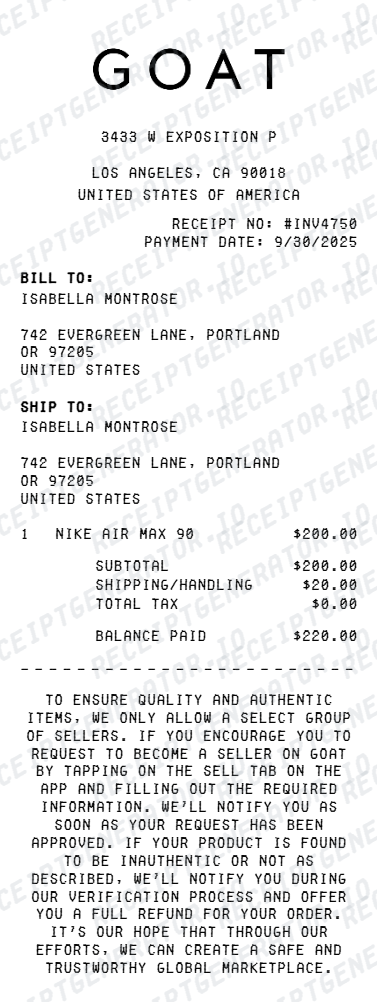
GOAT is a curated marketplace where sellers list items and GOAT physically authenticates them before shipping to buyers.
GOAT receipt structure:
- Order ID (alphanumeric)
- Seller location (country)
- Sneaker name, SKU, size, and colorway
- Condition grade
- Item price
- Cash fee (GOAT's transaction fee)
- Authentication fee (separate line item)
- Shipping protection fee
- Shipping cost
- Total paid
The condition grade is unique to GOAT — it distinguishes between New, New without box, Used, and various worn grades. This is critical for resale documentation on GOAT because condition directly affects pricing.
Which Platform Receipt Is Better for Resale?
For listing on StockX: Your StockX receipt is the standard proof of purchase. Buyers on StockX trust the authentication tag over the receipt — but the receipt supports your sale if a dispute arises.
For listing on GOAT: GOAT buyers rely on GOAT's own authentication, so your GOAT receipt mainly supports your personal records and any private resale outside the platform.
For private resale (Instagram DMs, Discord, Facebook groups): A StockX receipt is more widely recognized. GOAT receipts are equally legitimate but less immediately understood by casual buyers unfamiliar with the fee structure.
For collection insurance: Both receipts are equally valid. Insurance riders care about purchase price, item description, and date — both platforms provide all three.
Generate Both Receipt Formats
Use the dedicated generators to create clean records for your StockX and GOAT purchases:
Open the StockX Receipt Generator
Create a structured StockX-style receipt with buyer premium, processing fee, and authentication details.
Open the GOAT Receipt Generator
Create a structured GOAT-style receipt with cash fee, condition grade, and authentication details.
Related Guides
- How to Get a StockX Receipt
- GOAT Receipt Guide
- How to Get a Nike SNKRS Receipt
- Sneaker Resale Documentation Guide
Final Takeaway
StockX and GOAT receipts serve the same purpose — proving an authenticated sneaker purchase — but use different field names, fee structures, and formats. Knowing the difference helps you create accurate records for each platform and present the right documentation when reselling privately or managing a collection.
FAQ
StockX receipts show a buyer premium, processing fee, and authentication verification tag. GOAT receipts show a cash fee, shipping protection, and condition grade instead.
The layout and field labels differ because StockX is a bid/ask exchange while GOAT is a curated resale marketplace.
Both work well. StockX receipts are more widely recognized in the sneaker community because of StockX's market dominance. GOAT receipts are equally valid for proving authenticated purchase.
Both show sneaker name, size, and style code. StockX labels it as 'style' while GOAT uses 'SKU'. Both include colorway and condition.