How to Read an iPhone Purchase Receipt
Ready to create your own? Use our free receipt generator — no account needed.
Generate iPhone Receipt →On this page
A iPhone receipt records exactly what you bought, what you paid, and the details you may need later for returns, resale, or expense records. Reading it field by field makes those details easy to confirm.
Quick Answer
Read your iPhone receipt top to bottom: confirm the store or order reference, the itemized purchase, applicable discounts or fees, tax, and the final total paid.
What a iPhone Receipt Shows
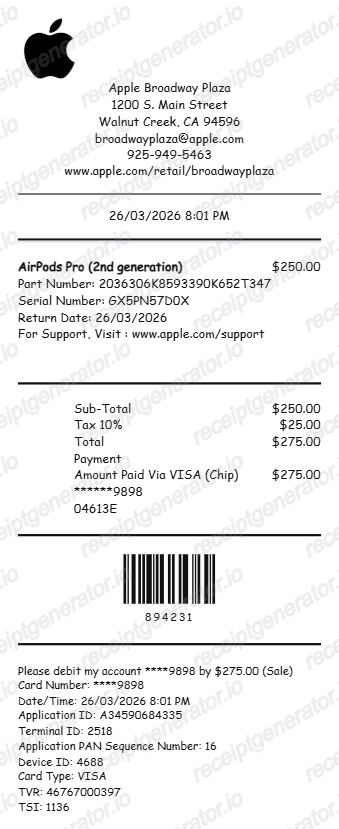
A iPhone receipt generally includes:
- store, seller, or order reference
- purchase or order date
- itemized products with descriptions
- item prices and quantities
- subtotal before tax
- discounts, fees, or credits applied
- sales tax
- total paid
- payment method
Reading these fields in order helps you verify the purchase quickly and spot anything that needs follow-up.
Which Fields Matter Most
For most follow-up tasks — a return, a warranty claim, resale, or an expense report — the item description, purchase date, and total paid matter most. Keep the original iPhone receipt or order confirmation as your primary record, and confirm those fields match before you rely on it.
Need a Cleaner iPhone Receipt Record?
If you have the original purchase details and want a cleaner, structured copy for your files, use the iPhone Receipt Generator.
Open the iPhone Receipt Generator
Create a structured iPhone-style receipt from your verified purchase details.
Related Guides
- AppleCare+ Explained: How It Appears on Your Receipt
- iPhone Trade-In: How Credits Show Up on Your Receipt
- iPhone Receipt Example
Final Takeaway
Read your iPhone receipt top to bottom: confirm the store or order reference, the itemized purchase, applicable discounts or fees, tax, and the final total paid. Keep the original iPhone receipt as your proof of purchase, and build a cleaner copy from those verified details if you need one.
FAQ
A iPhone receipt shows the purchase or order reference, itemized products, subtotal, any discounts or fees, tax, and total paid.
It serves as your proof of purchase.
The itemized purchase detail, the date, and the total paid matter most for returns, resale, and expense records.