U-Haul Storage Fees Explained: Admin, Environmental & Lock Charges
Ready to create your own? Use our free receipt generator — no account needed.
Browse Receipt Templates →On this page
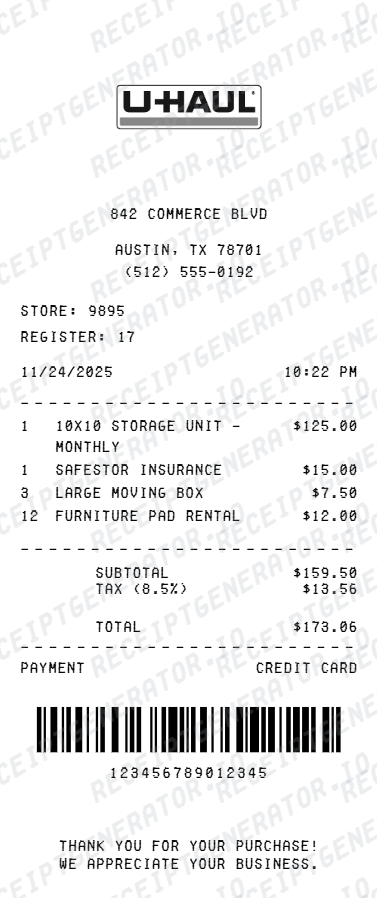
U-Haul Storage Fees Explained: Admin, Environmental & Lock Charges helps you understand the charges on a U-Haul Storage receipt. Knowing how each fee is calculated makes the final total easy to verify and document.
Quick Answer
A plain-English breakdown of every fee line that appears on a U-Haul storage receipt and when each charge applies.
How the Charges Break Down
On a U-Haul Storage receipt, the total is usually built from:
- the item or sale price
- applicable service or buyer fees
- processing or shipping charges where they apply
- tax
- the final total paid
Reviewing each line confirms the fee was applied correctly and matches what you expected at checkout.
Why the Fee Detail Matters
For resale, reimbursement, or simple budgeting, the fee breakdown explains the gap between the sticker price and the amount actually charged. Keep the U-Haul Storage receipt or order confirmation so you can reference the exact fee detail later.
Need a Cleaner U-Haul Storage Receipt Record?
If you have the original purchase details and want a cleaner, structured copy for your files, use the U-Haul Storage Receipt Generator.
Open the U-Haul Storage Receipt Generator
Create a structured U-Haul Storage-style receipt from your verified purchase details.
Related Guides
- How to Access Your U-Haul Storage Billing History
- How to Claim Storage Costs as a Business Expense
- U-Haul Storage Receipt
Final Takeaway
A plain-English breakdown of every fee line that appears on a U-Haul storage receipt and when each charge applies. Keep the original U-Haul Storage receipt as your proof of purchase, and build a cleaner copy from those verified details if you need one.
FAQ
A U-Haul Storage receipt typically itemizes the item price, any applicable buyer or service fees, shipping or processing where relevant, tax, and the final total.
The difference is usually buyer fees, shipping, processing, and tax added on top of the item price.