How to Claim Storage Costs as a Business Expense
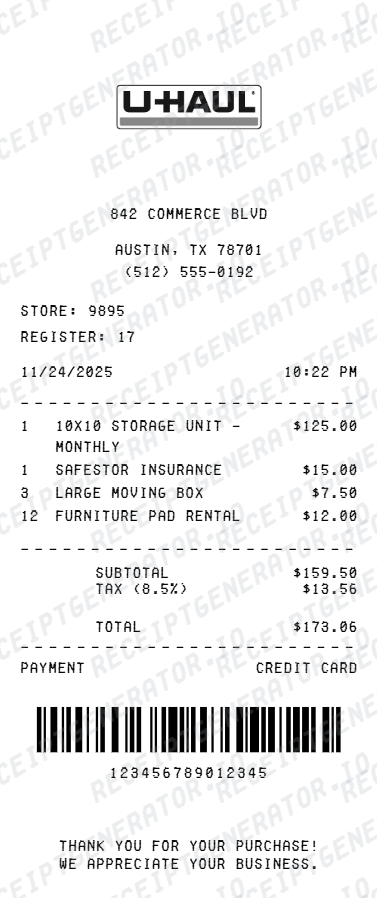
Ready to create your own? Use our free receipt generator — no account needed.
Browse Receipt Templates →On this page
How to Claim Storage Costs as a Business Expense is straightforward once you know what reviewers expect. An itemized receipt with a clear total is what supports a reimbursement or expense claim.
Quick Answer
What documentation you need from your U-Haul storage receipt to claim storage costs as a deductible business expense.
What Reviewers Usually Want
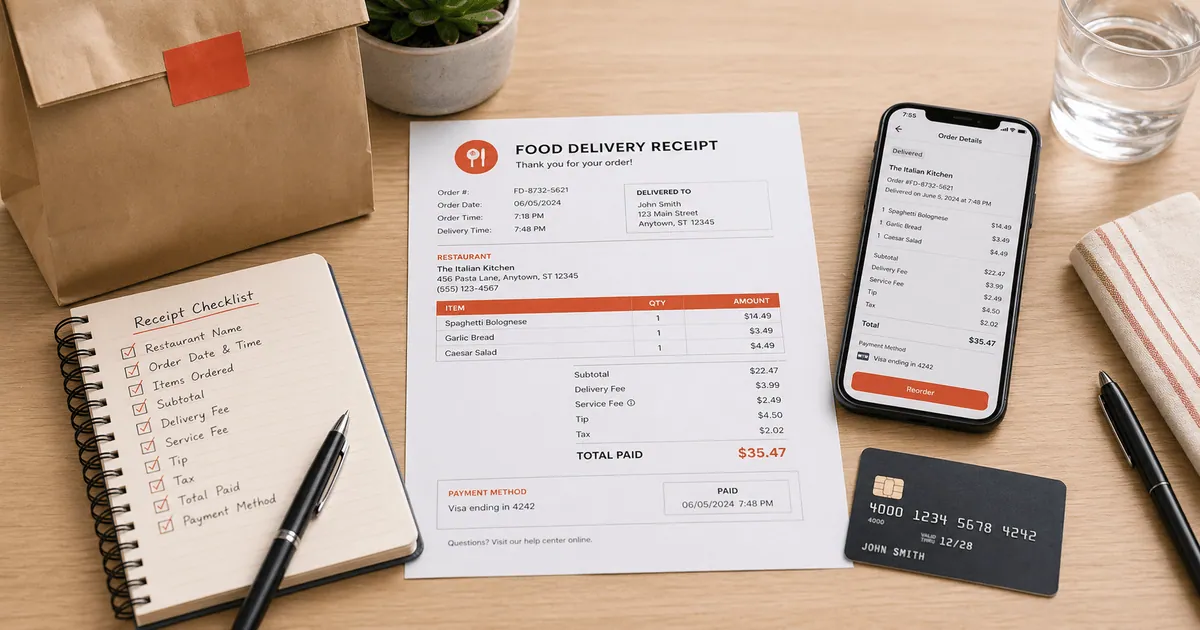
A reimbursement-ready record usually works best when it shows:
- the seller, provider, or venue
- the date
- the itemized purchase or service
- subtotal, tax, and total paid
- a short business purpose
That gives finance enough to approve the expense quickly.
Keeping a Clean Record
Itemized detail matters most when an expense mixes business and personal items or supports a larger trip or project claim. This aligns with the IRS recordkeeping standard for business expenses — see IRS Publication 463.
Need a Cleaner U-Haul Storage Receipt Record?
If you have the original purchase details and want a cleaner, structured copy for your files, use the U-Haul Storage Receipt Generator.
Open the U-Haul Storage Receipt Generator
Create a structured U-Haul Storage-style receipt from your verified purchase details.
Related Guides
- How to Access Your U-Haul Storage Billing History
- U-Haul Storage Fees Explained: Admin, Environmental & Lock Charges
- U-Haul Storage Receipt
Final Takeaway
What documentation you need from your U-Haul storage receipt to claim storage costs as a deductible business expense. Keep the original U-Haul Storage receipt as your proof of purchase, and build a cleaner copy from those verified details if you need one.
FAQ
It should show the seller, date, itemized purchase, tax, total paid, and a short business purpose.
Most expense policies prefer an itemized receipt over a card-only summary, since it shows exactly what was purchased.