Free Oil Change Receipt Generator
Create Free Oil Change Service Receipts Online - Add Service, Oil Type & Vehicle Details. Download PDF Instantly.
Create an oil change receipt with vehicle details, service items, mileage, tax, and payment. Download a PDF for fleet records or auto maintenance tracking.

Choose
Oil Change Receipt selected

Customize
Fill in your details

Download
Save or share receipt
Edit the details once and the preview updates instantly.
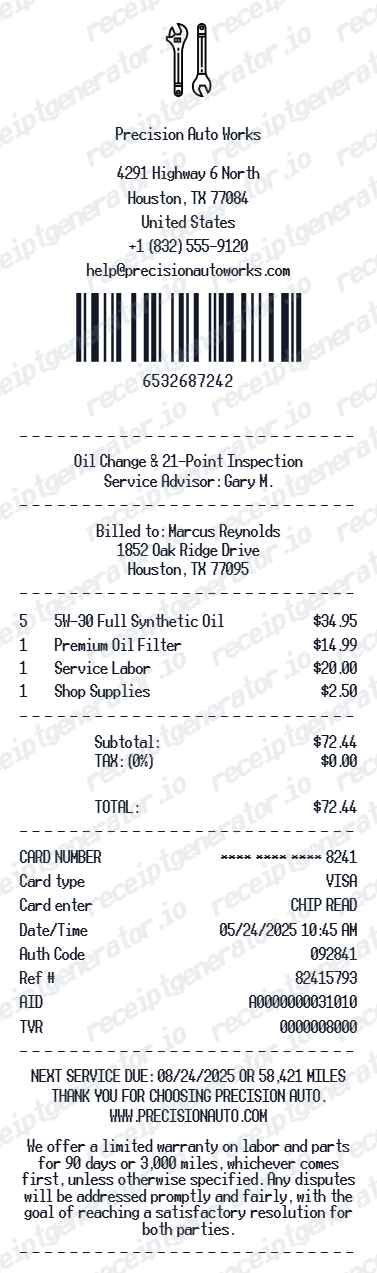
Quick summary
Oil Change Receipt template overview
Use this Oil Change Receipt template to build a clean, editable receipt record with the merchant, date, line items, tax, totals, and payment details already laid out for faster review.
What Is on a Real Oil Change Receipt?
An oil change receipt is really a service invoice: it documents the vehicle, the exact products used, and when to come back. A credible replacement copy should match these fields.
Odometer reading at service
Every legitimate service invoice records the mileage when the vehicle came in - some shops log odometer in and out. This number anchors the maintenance history and is the first thing warranty reviewers and used-car buyers check.
Oil spec, not just 'oil change'
Real invoices list the oil brand, the viscosity grade (like 0W-20 or 5W-30), whether it is conventional, synthetic blend, or full synthetic, and the number of quarts used. Warranty claims can hinge on proving the oil met the manufacturer's specification.
Filter brand and part number
The oil filter appears as its own line with brand and part number, giving product traceability if a filter fails. Air filters, wiper blades, and other add-on services print as separate line items.
Next-service sticker data
The invoice repeats what the windshield sticker says: the recommended next-service mileage and date. Conventional oil intervals typically run 3,000-5,000 miles, while full synthetic commonly stretches to 7,500-10,000 miles per manufacturer guidance.
Work order number and vehicle ID
A work order or invoice number heads the document, followed by the vehicle year, make, model, color, license plate, and often a partial VIN - the identifiers shops use to pull service history later.
Parts, labor, and disposal fees split
Totals separate parts from labor, and most shops add a small shop-supplies or used-oil disposal/environmental fee before tax - a line item reviewers expect to see on a genuine auto service invoice.
Print-ready oil change receipts
Edit the layout, watch it update live, then print, download PDF, or email.
Live oil change receipt preview
Watch the receipt update as you add service details and parts.
One-click print
Print your oil change receipt from the browser.
Download as PDF
Export a clean auto service receipt PDF for records.
Mobile-friendly editor
Create oil change receipts from any device.
Get Your Original Oil Change Receipt First
Shops keep service records far longer than you keep paper: quick-lube chains and dealer service departments store history by license plate, VIN, or phone number and can reprint a past invoice on request, and many chains email a copy at checkout - search your inbox for the service date. Use this template when the original is unavailable - a shop that closed, a cash payment with no record, or a service done by a previous owner.
Fleet vehicle expense tracking
Document oil changes for fleet management expense reporting.
Personal vehicle maintenance log
Create oil change receipts to track routine car maintenance history.
Business vehicle reimbursement
Submit oil change receipts for business vehicle expense reimbursements.
Vehicle sale documentation
Show oil change history receipts for vehicle resale value documentation.
Oil Change Receipt Types
Choose the oil change receipt format for your auto service.
Basic Oil Change Receipt
Auto service receipt for oil change and filter with mileage.
Full Service Receipt
Oil change receipt with additional services like tire rotation and air filter.
Fleet Maintenance Receipt
Oil change receipt formatted for fleet vehicle expense documentation.
Related Guides
Explore related guides to understand the receipt details, lookup steps, and documentation workflows.
What Oil Change Receipts Do You Need for a Warranty Claim?
A breakdown of what information your dealership or warranty provider needs to see on an oil change receipt to honor an engine warranty.
Read guideGas Receipt Lookup
Find the best place to recover original fuel transaction details before building a cleaner backup copy.
Read guideRelated Other Receipt Templates
Browse our collection of receipt templates for various purposes.
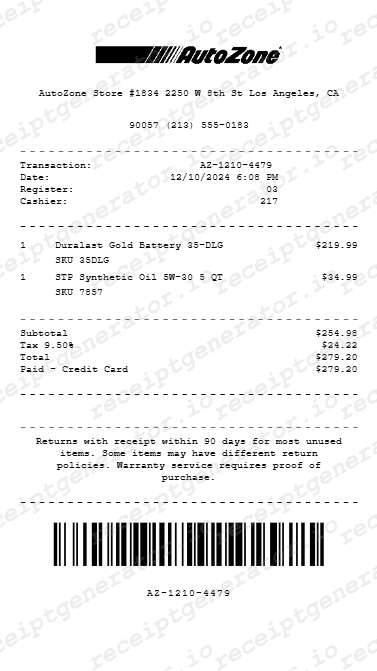


Oil Change Receipt FAQ - Auto Service Documentation & Fleet Records
Learn how to create oil change receipts with vehicle details, oil type, and PDF export for auto service and fleet expense documentation.
Choose the oil change receipt template, add service center name, vehicle details, oil type, filter brand, mileage, labor, taxes, and payment method. Preview and download as PDF.
Yes. Fleet managers and drivers use oil change receipts to document routine maintenance costs for vehicle expense reimbursement.
Yes. Download a clean PDF for fleet records, insurance documentation, vehicle maintenance logs, or expense reimbursements.
A real oil change invoice shows the shop name and address, a work order or invoice number, the vehicle year, make, model, and often the license plate or partial VIN, odometer reading at service, the oil brand, viscosity grade, and quarts used, the filter brand and part number, any extra services as separate lines, a parts-versus-labor split with shop supply or oil disposal fees, and a next-service recommendation by mileage and date - the same numbers printed on the windshield sticker.
Add the store name, purchase date, line items, totals, tax, payment method, and any optional notes you need on your Free Oil Change template.
Yes. Include vehicle year, make, model, VIN (last 8 digits), odometer in, and odometer out for a complete auto service record.
Yes. Include technician name, bay number, service advisor, and work order number for complete shop documentation.
Call or visit the shop that did the work - quick-lube chains and dealer service departments keep service history by license plate, VIN, or phone number and can reprint the invoice. Chains like Jiffy Lube and Valvoline also email invoices, so search your inbox for the service date. If you paid by card, your statement plus the shop's records can reconstruct the visit.
Yes. Under the US Magnuson-Moss Warranty Act, a manufacturer cannot deny warranty coverage just because you used an independent shop - but you must prove the vehicle was serviced on schedule with oil meeting the manufacturer's specification. Receipts showing the date, mileage, oil viscosity, and quarts used are exactly the evidence warranty administrators ask for.
Receipt Generator · Receipt Maker · 300+ Free Templates
Create professional receipts online in seconds
Use the Receipt Generator editor with ready-made templates. Compare pricing or start generating print-ready PDF receipts in your browser no account required.